
Career pathways offer structured routes that help individuals develop skills, gain work experience, and move toward competitive integrated employment (CIE). Vocational Rehabilitation (VR) agencies collaborate with employers, education systems, and workforce programs to create pathways that include progressive learning and employment experiences such as pre-apprenticeships, apprenticeships, internships, on-the-job training (OJTs), and work-based learning experiences (WBLEs).
What is a Career Pathway?
Career pathways are coordinated education, training, and employment services that align with industry workforce needs, combine education and real-world work experience, allow individuals to enter and exit at multiple points, and lead to progressively higher levels of employment and wages.
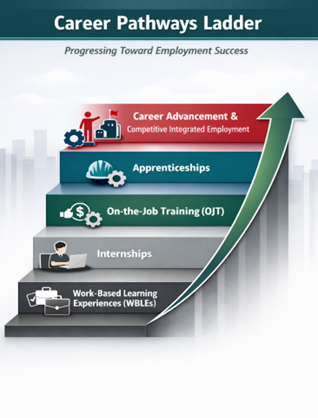
Career Pathways Ladder
The ladder below illustrates how work-based learning opportunities can progressively build skills and lead to long-term competitive integrated employment.

Why Career Pathways Matter
Career pathways assist individuals with disabilities in moving beyond entry level jobs toward sustainable careers with growth opportunities. By integrating education, training, and work experiences, VR agencies and workforce partners can develop structured pathways that promote long-term economic independence. This focus may increase wages after VR exit and improve reportable outcomes.
Legal Considerations for All Career Pathways
Americans with Disabilities Act (ADA): These apply to apprenticeships, internships, and OJT placements.
Statutory Citations
42 U.S.C. §12101 – Findings and purpose
42 U.S.C. §12112 – Discrimination in employment
42 U.S.C. §12111(8) – Qualified individual with a disability
Implementing Regulations
29 CFR Part 1630 – EEOC ADA Employment Regulations
Relevant sections:
29 CFR §1630.2 – Definitions
29 CFR §1630.9 – Reasonable accommodation
29 CFR §1630.4 – Prohibited discrimination